





About
Goal
Design and develop a fully-online, immersive experience in order to prepare future social workers with the necessary skills to adequately work with combat veterans. The overarching goal was to increase cultural competence and develop empathy for this segment of our population.
Combat Vets: Background
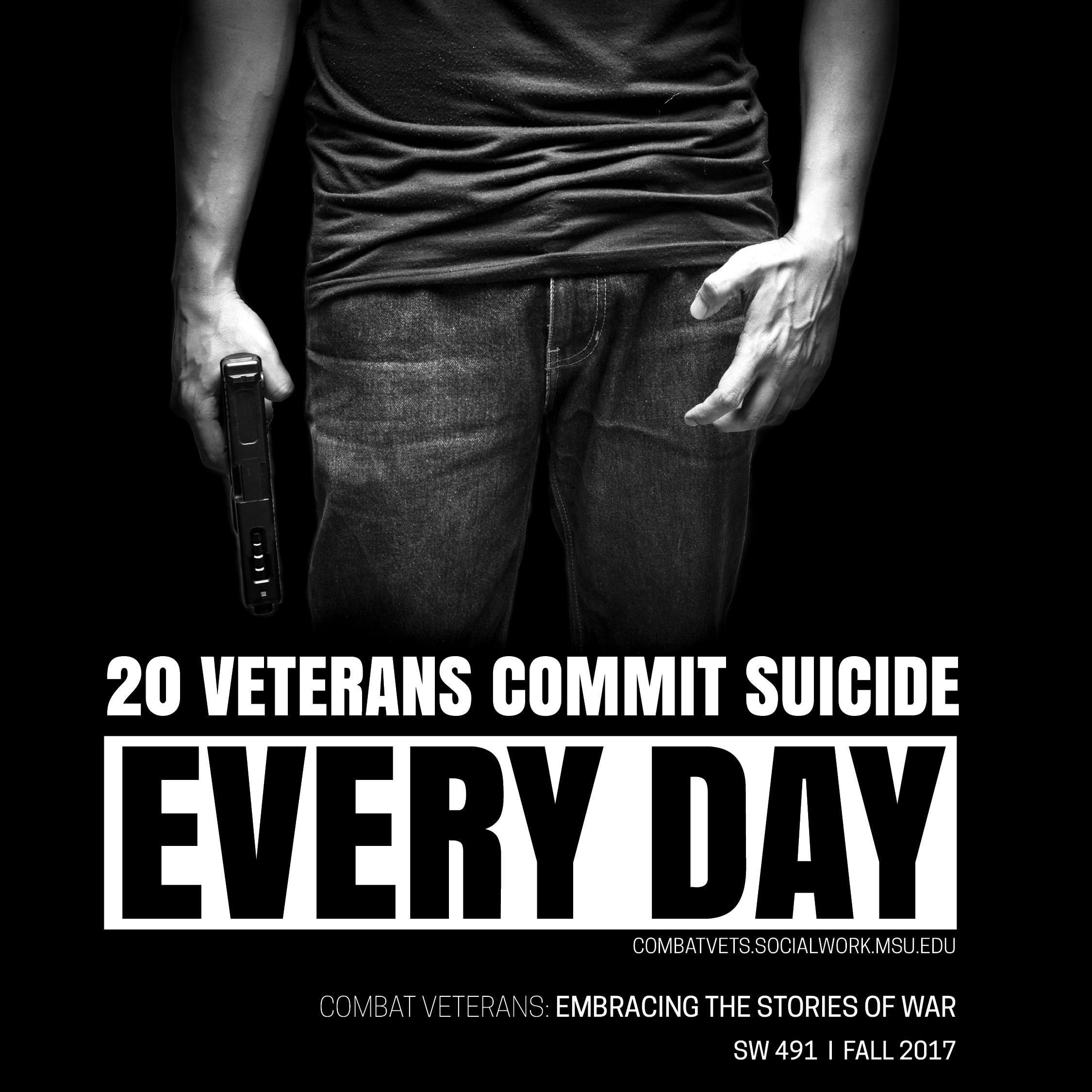
More than 2.7 million troops have been deployed to Afghanistan and Iraq since 2001. As many as 20% of these combat veterans have been diagnosed with PTSD and an average of 21,000 Traumatic Brain Injuries have been diagnosed each year since 2000. Suicide now takes more lives than war, with 22 veterans committing suicide every day. The need for culturally competent and skilled military social work services is immense.
Trauma experienced by combat veterans is beyond what most social workers know. Combat is an extremely visceral experience imprinted on the souls of the individuals.
How do we educate social workers to be culturally competent with this population?
My Roles
I wore many hats during the course of this project:
Project Manager – team formation, scheduling, facilitation, production coordination, overall project planning and reporting
UX Designer – user research, interviews, data collection, experiential design
Visual/Graphic and UI Artist – print/web graphics and interfaces
Video Production – filming and editing interviews
Project Scope
The lead instructor was charged with creating a fully-online learning experience for social work students around the experiences of combat veterans. While extremely passionate on the subject but not knowing at all where to begin on this journey, she approached me with the challenge of “I want this to be different…I don’t want this to be another academic course. I want students to care. I want them to truly understand and empathize with these veterans. How can we get them to care?”
The scope of the project was initially driven by the basic requirements of the university’s online course process, along with the statements “I don’t want this to be a traditional academic course” and the focus question of “How do you teach empathy (for this population)? The following project objectives were then developed through a series of brainstorm sessions with the instructors, veterans, and design team members:
Student Learning Outcomes
- To develop cultural competencies of the combat veteran population
- Develop empathy for this population
- To apply social work values and ethics in working with combat veterans.
- Recognition of the need for cultural competence in the provision of social work services to combat veterans.
- Evaluate the impact of combat experience on veterans.
- Identify service needs and associated resources and evidence-based interventions for combat veterans.
Overarching Goals
- To create a safe learning space. Safe, meaning, a space that students could ask questions openly and honestly.
- To create a trusting space, one in which students could be vulnerable and honest with the instructor
- To design an environment that students wanted to be a part of, to explore and learn via various mediums and experiences
- To provide many opportunities for reflection, both for the student to have time in comprehending the material, and also as a way for us to gauge their level of understanding
Models, Theories and Approaches Used
Models Used
- Immersive Learning
- Immersive Design
- Human Centered Learning
- Reflections – Deliberate Learning
Theories Explored
- Students learn better in an immersive environment
- Knowledge gained from an experience has lasting impact
- To truly understand a niche population’s perceptions, ideas, fears, issues, etc., one must experience a certain degree of that population’s experience. But how much is needed? To what degree must it be experienced?
- Designing an immersive experience is not a literal copy of an experience, but a purposefully designed translation of an experience had by another using various mediums and methods, as well as involving all of the physical senses? (or a certain number of the senses? We didn’t have smell…)
Design Questions Formulated
- How do you teach empathy?
- How do you design an experience that cannot be replicated? (war)
- How do you…or can you…put students in the shoes of a veteran?
- What design elements must be present in order to produce an authentic learning experience? Or an immersive environment?
Learning Questions Posed
- What constitutes as adequate training for future social workers to effectively work with combat veterans?
- In what ways do practitioners’ biases/misunderstandings/lack of cultural knowledge affect their interactions/practice with combat vets?
Evaluative Questions
- How empathetic are future social workers to the situations of combat veterans before and after taking this course?
- How will we know if this is successful?
Brainstorming, planning and facilitation
Team Formation
The project initially begin with one instructor reaching out me, as she recalled my expertise from a workshop I had facilitated around online learning and course design a year prior. Upon realizing that this would be a large and creative undertaking, I facilitated initial brainstorm sessions early on while bringing in various potential team members for each session. Given the type of project this was, as well as the subject matter, it was crucial to form the right mix of people for the team in order for the project to be a success.
Brainstorming and Facilitation
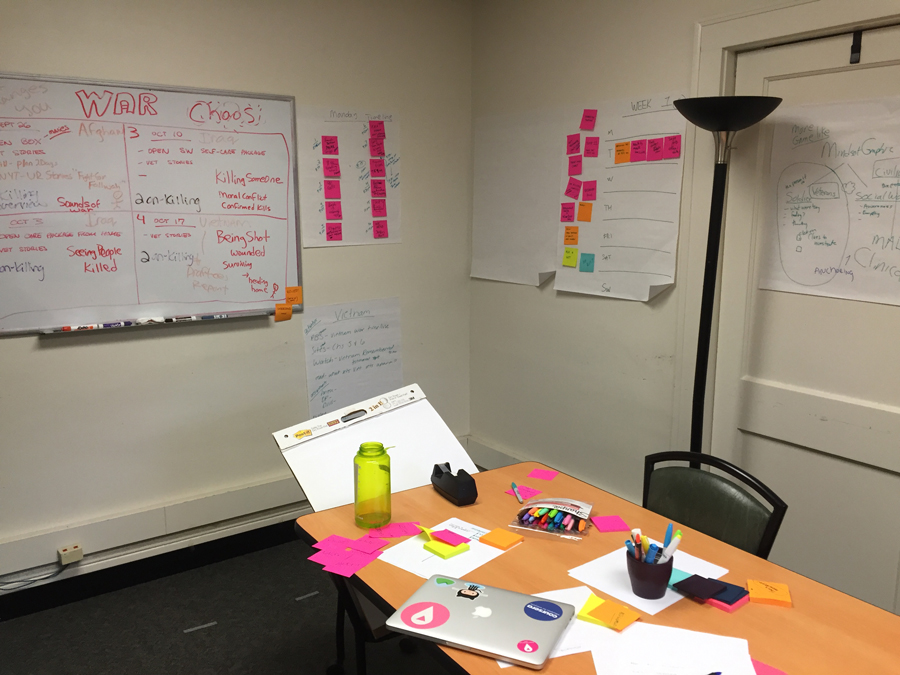
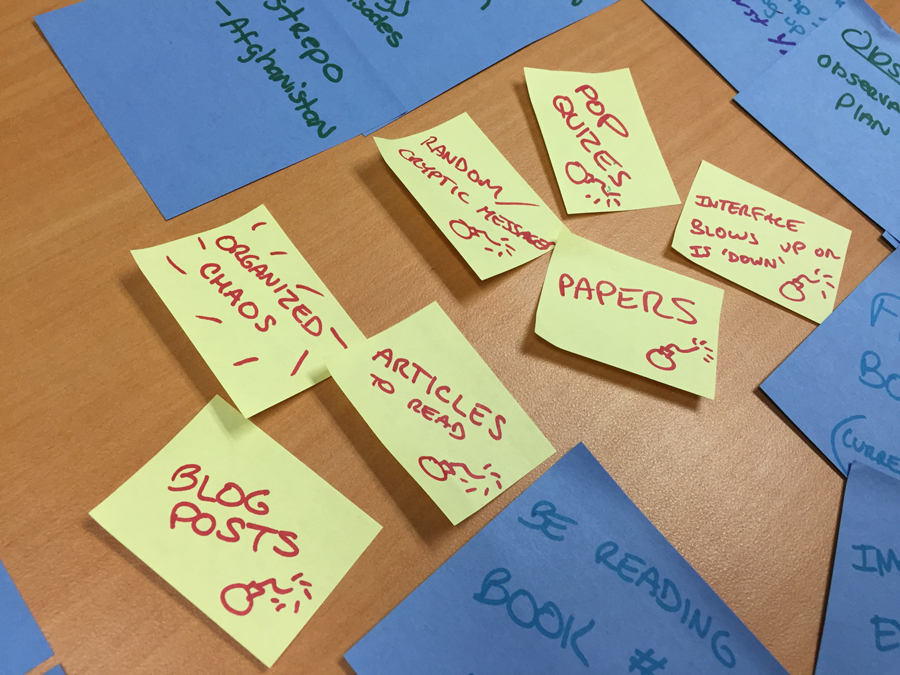
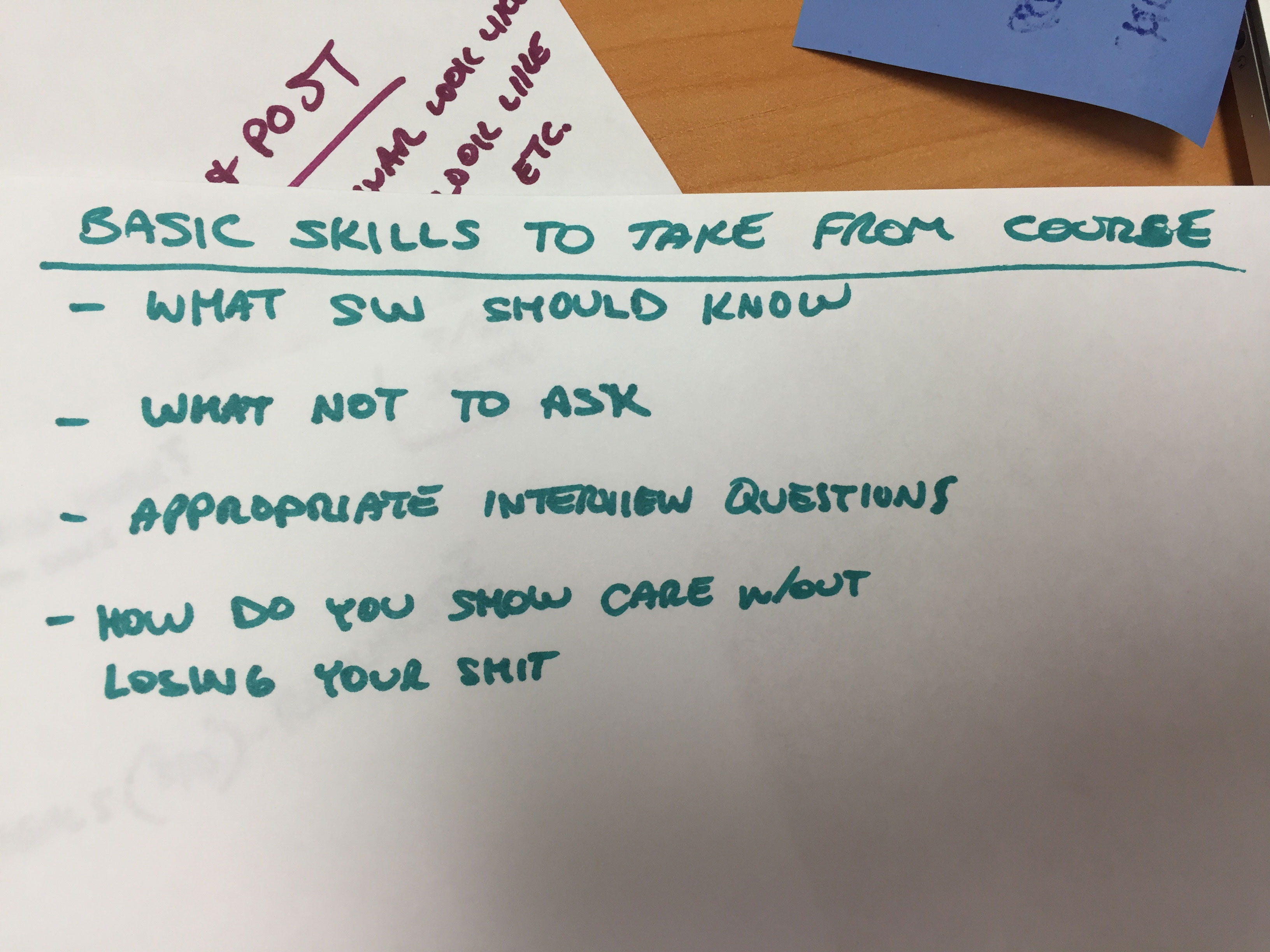
As I developed the team I used various brainstorm sessions to aid in testing out the fit of these team members. By providing the instructor and veterans with various prompts, I was able to facilitate discussions around what her ultimate teaching goals were, what the students should come away with and some starting ideas of how this course might take shape in some unconventional ways.
Exploration and Design
Utilizing interviews with veterans, I had to utilize active listening to really get the details of their stories and take notes on what emotions they demonstrated. Through these interviews I was able to formulate, along with my design colleague from the team, a focus around the sensory response to situations that seemed to relate across all stories. While each veteran’s story is different, there emerged some similar emotional patterns that I noticed, which is what became the focus questions that the team could always check our design against:
- What does that feel like?
- What does that look like?
- What does that sound like?
- What does that taste like?
- What does that smell like?
Each activity and assignment was purposefully designed around these questions throughout the process.
Deliverables
Course Requirements
- Develop a fully functional online course for a 15-week semester
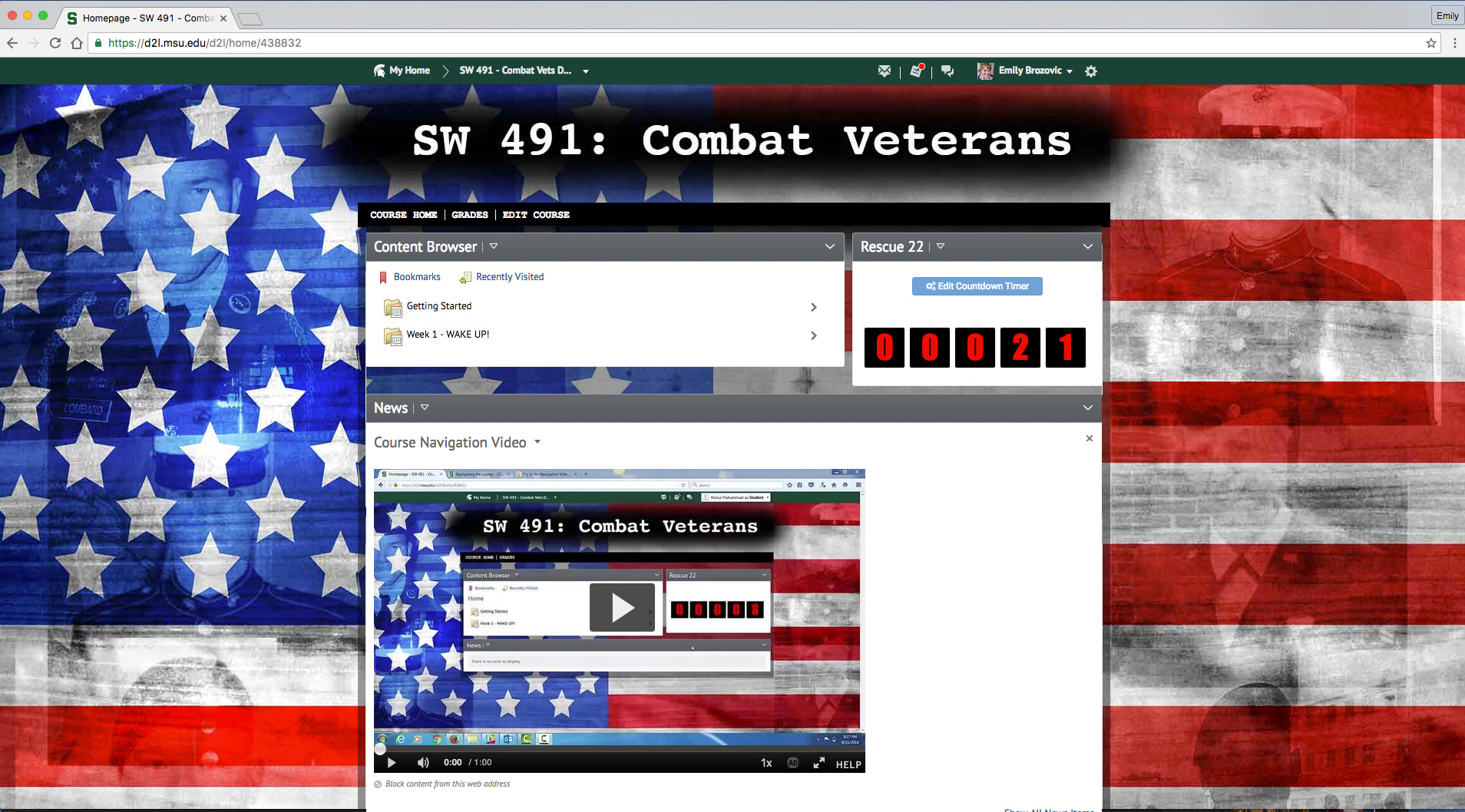
- Create full outline of course with all required functionality in university’s LMS
Course Experiences
Based upon the overall outline and timeline of the course, the following experiences were to be designed, developed and produced within their respective mediums:
- Enlisting in the military
- Bootcamp
- Being drafted
- Combat
- PSTD and isolation
These experiences included deliverables such as:
- Graphics
- Photos
- Full production videos
- Sourcing and delivering of tactile items (dog tags, MREs)
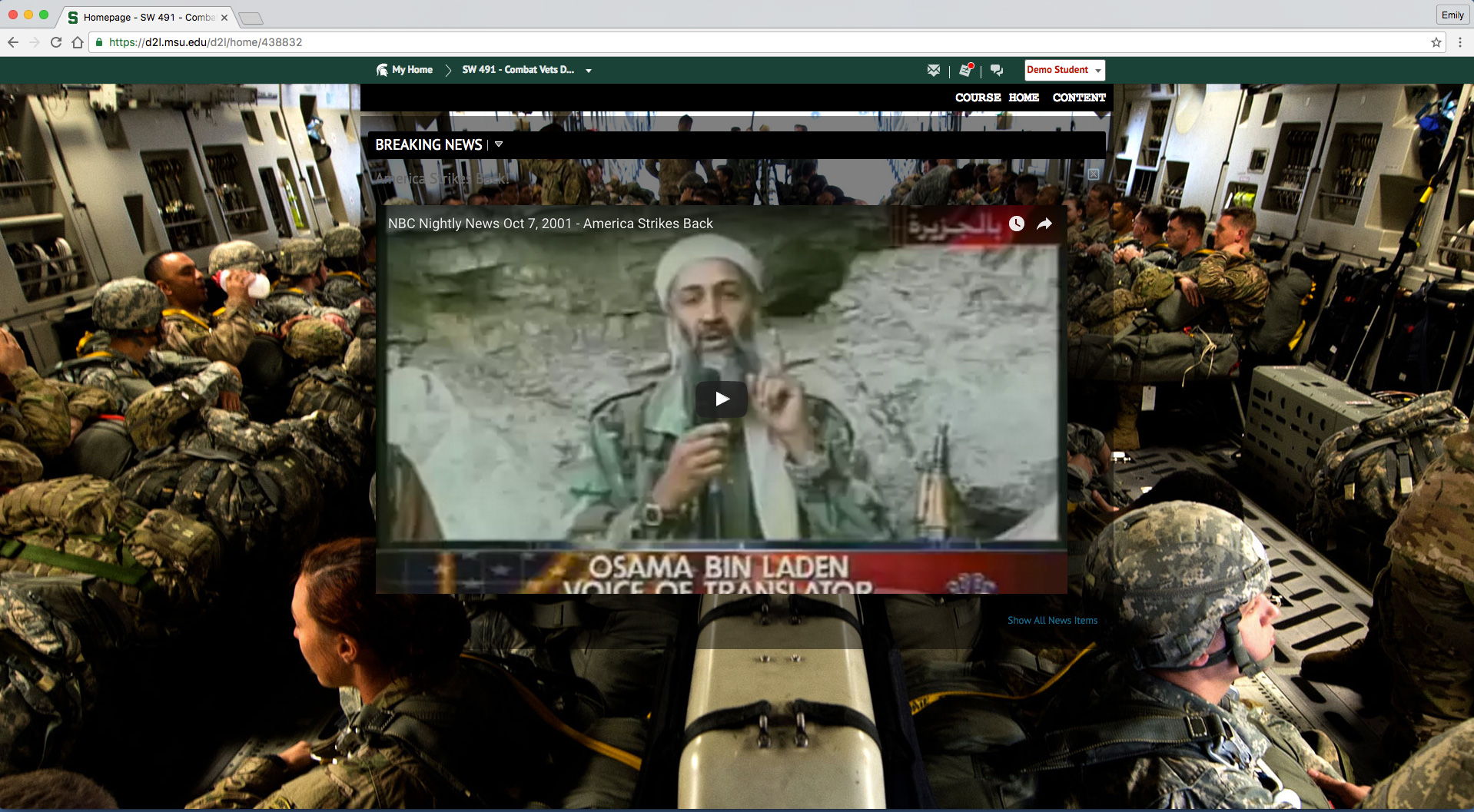
- Course interface customization
- Website design and development
Tools
- Adobe Creative Suite
- LMS
- YouTube
- Google Tools (docs, forms, photos, etc.)
- Remind
- SoundCloud
- Post-its (lots of them)
Roles
Project Manager – team formation, scheduling, facilitation, production coordination, overall project planning and reporting
UX Designer – user research, interviews, data collection, experiential design
Visual/Graphic and UI Artist – print/web graphics and interfaces
Video Production – filming and editing interviews